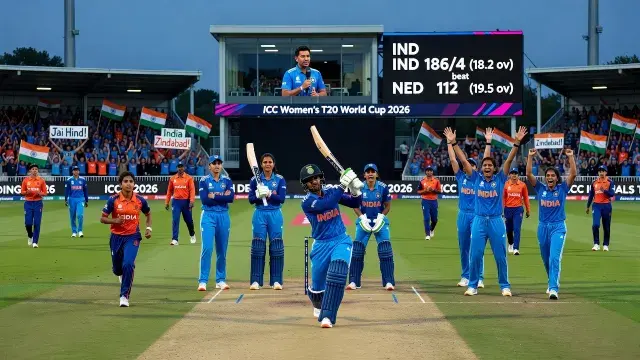
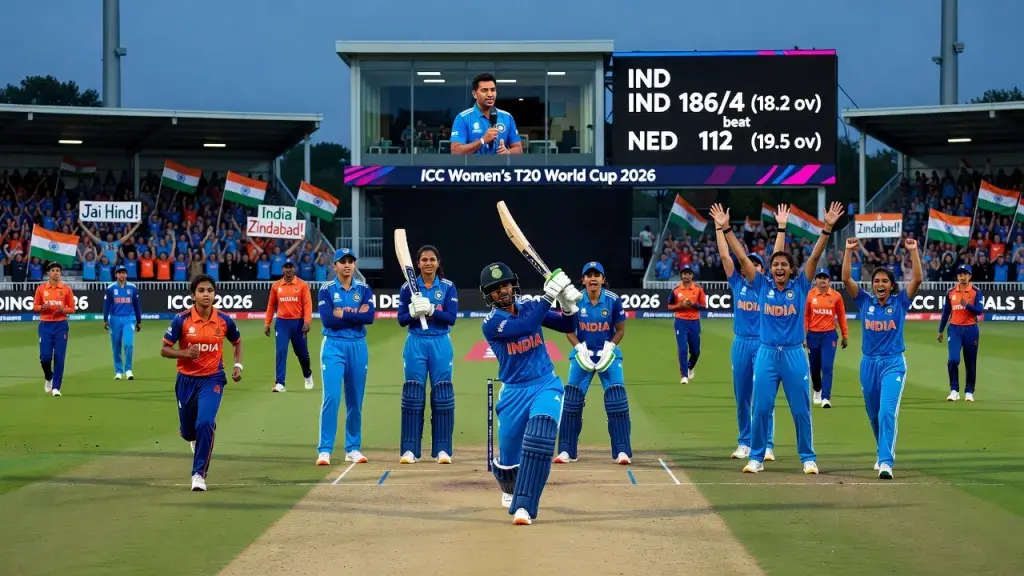
India carry strong momentum into their second group-stage fixture of the ICC Women's T20 World Cup 2026, facing the Netherlands in what will be the first-ever Women's T20 International between the two nations. The match takes place at Leeds, a ground that analysts have noted is playing increasingly well for batting. With India having swept past Pakistan in their opener and the Netherlands suffering a defeat to Bangladesh, the contest arrives with notably different levels of confidence in each camp.
The novelty of a first-time meeting cuts both ways - neither side carries baggage from previous encounters, but both will have invested time in video analysis to fill that gap. Cricket sits alongside disciplines such as football, rugby and even field hockey online betting when it comes to the growing global interest in women's sport, and this World Cup fixture reflects just how broadly the game's footprint has expanded. For India, the immediate task is straightforward: build on the opening win, protect the balance of a settled XI, and continue developing the form of key players ahead of the harder tests to come.
Speaking on JioStar's preview show Game Plan, former India opener and analyst Aakash Chopra offered a detailed breakdown of India's strengths and selection considerations. His assessment centred on three distinct talking points: the match-defining potential of Richa Ghosh, the emerging promise of left-arm spinner Shree Charani, and the case for keeping the playing XI unchanged despite early pressure on the batting unit.
Richa Ghosh: The Difference Between a Win and a Trophy
Chopra was emphatic in identifying Richa Ghosh as a potentially decisive figure not just in this fixture but across the tournament. "The difference between winning and losing for India, between India lifting the trophy or not, could well be Richa Ghosh," he said. The wicketkeeper-batter's ability to strike the ball cleanly over longer distances - Chopra noted she is among a rare group capable of clearing the boundary by 70 to 75 metres - makes her a genuine match-winner in the final overs, particularly under field-restriction rules that favour her aggressive style. His broader batting view is that Smriti Mandhana and Shafali Verma can be trusted to exploit the Powerplay, while Harmanpreet Kaur's experience at number four provides the middle-order backbone. It is what Richa does beyond that which could define India's tournament.
Shree Charani and the Spin Arsenal India Are Building
A significant portion of Chopra's analysis was devoted to Shree Charani, the young left-arm spinner playing in her debut T20 World Cup. He praised not just her technical ability - varying pace cleverly through the air and generating turn - but her temperament. "She doesn't get intimidated even if a batter hits her for a four or a six; she continues to back her strengths," Chopra observed. That psychological resilience, he argued, is what separates potential from impact at the international level. Chopra drew a direct comparison with Sophie Ecclestone, currently regarded as the finest left-arm spinner in women's cricket globally, and suggested Charani has the ceiling to reach that tier in time.
Meanwhile, Deepti Sharma's performance in the Pakistan game drew unreserved praise. Three wickets in a single over and five in total amounted to what Chopra called a "game, set and match" performance - clinical, experienced, and shaped by her familiarity with English conditions from stints in The Hundred. The combination of a battle-hardened senior spinner and an emerging talent in the same attack gives India genuine variety and depth with the ball.
Selection Stability Is the Smart Call, Chopra Argues
With India having won convincingly, the question of whether to rotate or tinker inevitably arises. Chopra's answer was firm: don't change a winning team without compelling reason. His only caveat was the Leeds surface - if there is fresh grass and morning moisture at Headingley, then the pace and movement of Renuka Singh Thakur could warrant a recall. Absent those conditions, he would leave the XI untouched. On Bharti Fulmali's early dismissal in the previous game, Chopra was pragmatic: one failure does not merit a drop. The bigger picture, he stressed, is ensuring that by the time India face South Africa or Australia in the knockout stages, every member of the squad has had enough game time to carry confidence into those high-stakes moments. Investing in players now, rather than chopping and changing, is how tournament squads build cohesion.