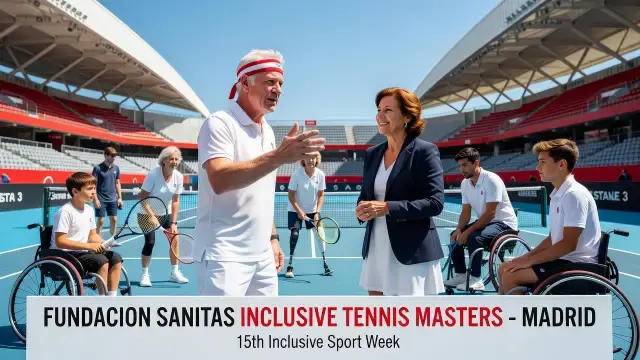
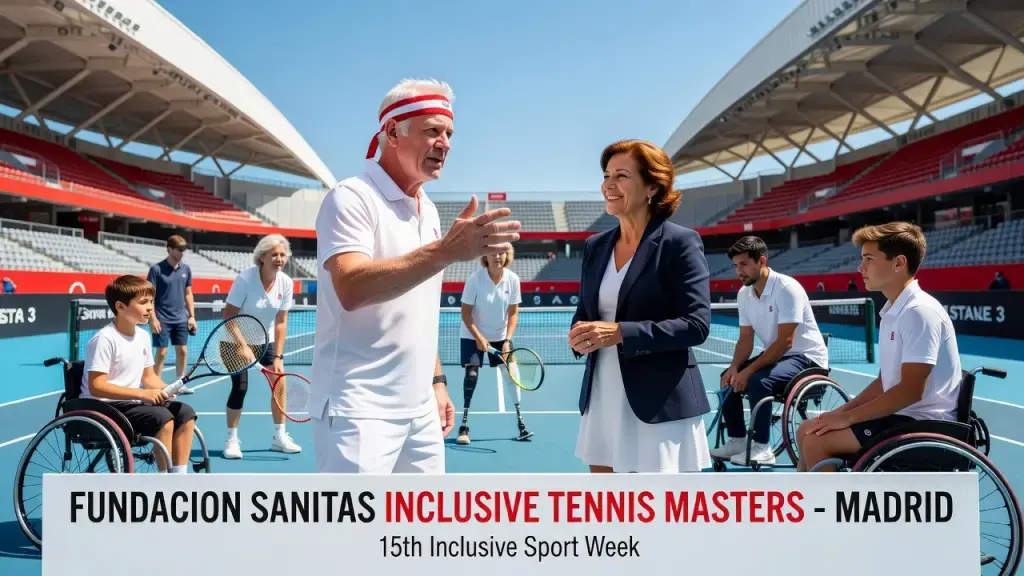
John McEnroe, a seven-time Grand Slam champion and former world number one, will headline an unusual fixture on the tennis calendar this week. The American legend and Argentina's Gabriela Sabatini will captain two teams at the first Inclusive Tennis Masters, organized by Fundacion Sanitas as part of the 15th edition of Inclusive Sport Week. The event takes place at Estadio 3 inside Madrid's Caja Magica, a venue more accustomed to hosting ATP and WTA tour stops than grassroots inclusion initiatives.
The format places two of the sport's most recognizable figures in a mentorship and leadership role rather than a competitive one, a departure from the exhibition matches McEnroe has played around the world in recent years. For fans following tennis culture and lifestyle coverage through platforms such as royal play 360, the initiative offers a reminder that the sport's biggest names continue to find relevance well beyond the traditional tour, lending their profile to causes that extend the game's reach into new communities.
McEnroe's resume needs little introduction. He won seven major singles titles, four at the US Open and three at Wimbledon, and spent over 170 weeks atop the world rankings during a career defined as much by his competitive fire as by his technical brilliance at the net. Sabatini, the 1990 US Open champion and a former world number three, remains one of the most celebrated players to emerge from South America, and her presence alongside McEnroe gives the event a genuinely global tennis pedigree.
A Platform Beyond Competition
Inclusive Sport Week has, over 15 editions, built a reputation for using high-profile athletes to draw attention to adaptive and inclusive sport programs that often struggle for visibility. By recruiting figures of McEnroe and Sabatini's stature, organizers ensure the Masters reaches audiences who might not otherwise engage with inclusive sport initiatives. The involvement of two Grand Slam winners also signals a broader trend in tennis, where legends increasingly lend their names to social and community projects once their playing careers end.
Media Rollout and Broader Reach
The interview segment featuring McEnroe was recorded in advance and shared ahead of broadcast so that coverage of the Masters could reach audiences before the tournament itself took place on Thursday. The programme, presented by former ATP player Alex Corretja, forms part of a wider media push around the event, with additional coverage set to air through Spanish public broadcaster RTVE. That rollout underlines how inclusive sport initiatives are increasingly packaged with mainstream media visibility, a strategy that helps normalize adaptive sport as part of the broader tennis conversation rather than treating it as a separate, lesser-covered category.
For a sport often associated with exclusivity and elite country-club tradition, Thursday's event at the Caja Magica represents a small but symbolically significant shift. Pairing two of tennis's most decorated champions with an inclusive sport programme puts adaptive tennis in front of an audience far larger than it would typically reach on its own.