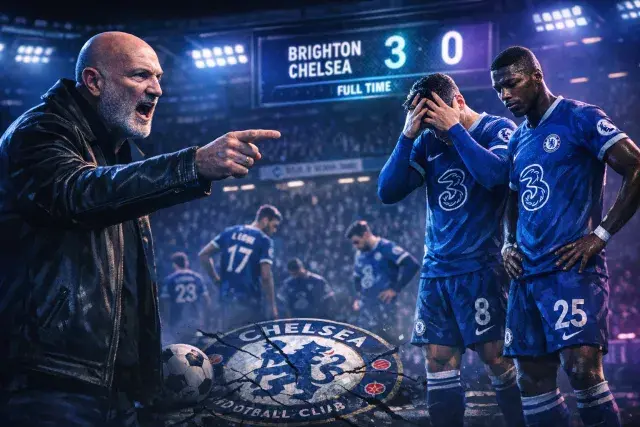
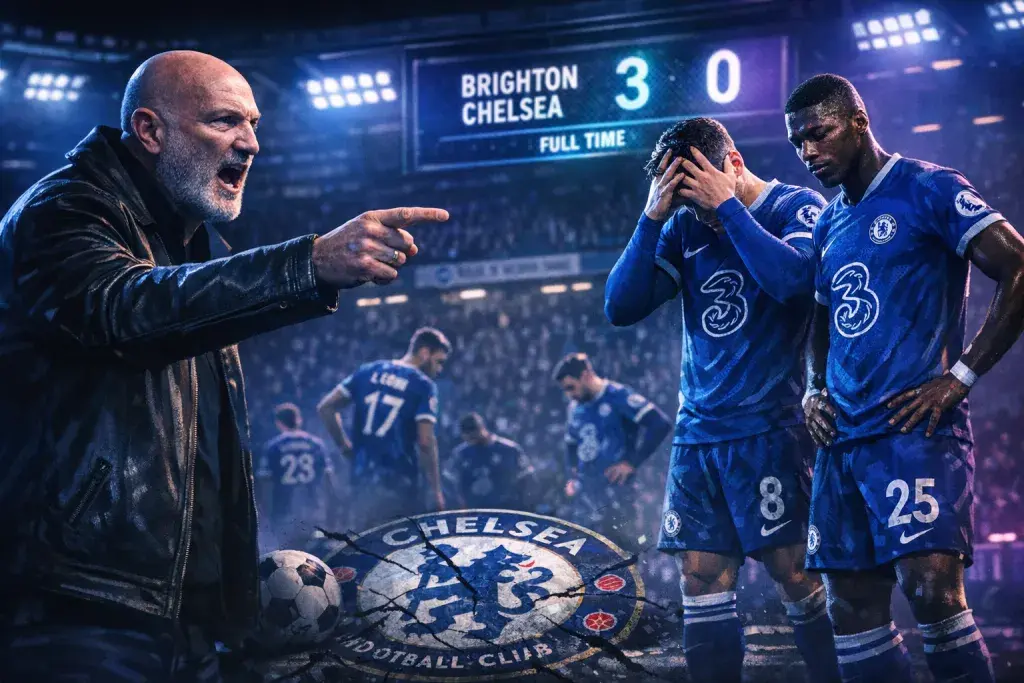
Former Chelsea defender Frank Leboeuf has unleashed a fierce critique of the club's most expensive acquisitions, Enzo Fernandez and Moises Caicedo, declaring them unfit to wear the badge due to absent leadership qualities. His remarks follow a humiliating 3-0 loss to Brighton, marking Chelsea's fifth straight Premier League defeat without a goal—a rare low not seen in over a century. Leboeuf's words spotlight deeper organizational flaws in squad construction at Stamford Bridge.
Midfield Failures Expose Leadership Vacuum
Leboeuf, a 1998 World Cup winner, pinpointed the midfield as ground zero for Chelsea's woes after the Amex Stadium collapse. Despite a £223 million investment in Fernandez and Caicedo, neither imposed control nor rallied the side. Speaking to ESPN FC, he lamented the absence of authoritative figures, echoing compatriot Marcel Desailly's recent sentiments: "We do not have leaders in that team. We need a goalkeeper as a leader, we need a centre-half, we need a midfielder."
This critique draws from Leboeuf's experience alongside icons like Dennis Wise, Craig Burley, and Roberto Di Matteo, who defined midfield dominance through command and resilience. Today's counterparts, he argues, fail to grasp the shirt's prestige or navigate crises, rendering them "not good enough" for Chelsea's ambitions.
Recruitment Strategy Prioritizes Youth Over Experience
Leboeuf directs blame upward to the board's preference for unproven talents over seasoned veterans. This approach has left Chelsea adrift, seven points from the top five with four matches remaining. "Caicedo and Enzo Fernandez are not leaders. I’m sorry, I’ve seen leaders," he stated, contrasting them with past stalwarts like Marcel Desailly, Steve Clarke, Gianluca Vialli, Ruud Gullit, and Gianfranco Zola—figures who propelled success under Roman Abramovich.
Such a youth-heavy model risks instability during slumps, as emerging players often lack the tactical nous and vocal presence to steer through adversity. Leboeuf warns this pattern dooms Chelsea to mediocrity unless rectified: "Next year, please to the board buy leaders. Otherwise Chelsea will never be the Chelsea we have known."
Managerial Pressure Mounts Amid Calls for Restraint
Manager Liam Rosenior faces sack demands from frustrated supporters, yet Leboeuf counsels patience. With an FA Cup semi-final against Leeds United looming, he deems an immediate change pointless: "You have to wait to the Leeds game. If Rosenior goes I don’t think it will change the mindset for me." A post-season overhaul, he insists, offers the true path to revival.
This stance underscores broader tensions in high-stakes environments, where impulsive decisions amplify disarray. Chelsea's plight illustrates how overreliance on financial power without cultural fit erodes institutional identity, demanding a strategic pivot toward proven commanders to reclaim elite status.