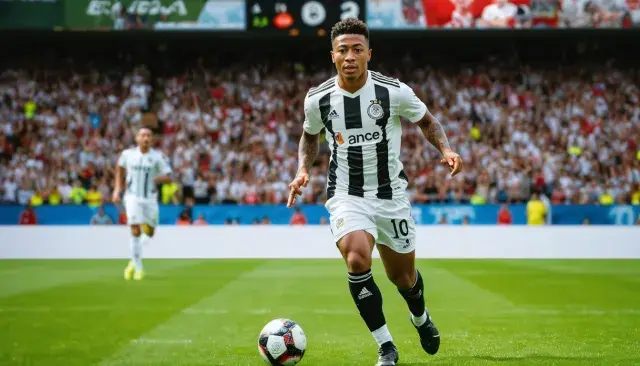

Inter Milan have secured the Serie A title for the 2025-26 season with three rounds of fixtures still remaining, defeating Parma 2-0 at the San Siro through goals from Marcus Thuram and Henrikh Mkhitaryan. The result, arriving as nearest rivals Napoli sit nine points adrift, confirms the Nerazzurri's third Italian title in six years - a run of sustained dominance that places the club among the most consistent forces in European football's recent history.
A 21st Scudetto and What It Represents
The number matters. Twenty-one Serie A titles positions Inter Milan as one of a small group of Italian clubs to have shaped the modern identity of the division across multiple eras. Their previous two recent titles came in 2020-21 and 2023-24, bookending a period in which the club rebuilt its financial footing, revitalised its squad structure, and retained belief in a long-term institutional vision at a time when several rival clubs were navigating considerable internal upheaval.
That resilience is significant context. Italian football spent much of the last decade wrestling with questions about its competitiveness on the continental stage and the financial sustainability of its biggest clubs. Inter's current run does not resolve those structural debates, but it demonstrates that consistent investment in squad depth, identity, and continuity of vision can yield results even within those constraints.
Piotr Zielinski's precision passing opened the Parma rearguard in first-half stoppage time, releasing Thuram for a composed finish that sent the San Siro into immediate celebration. Mkhitaryan, the 36-year-old Armenian midfielder who departed Manchester United in 2023 before joining Inter, added a second in the 80th minute following involvement from substitute Lautaro Martinez. It was an appropriate conclusion: a veteran who has orbited the edges of elite European football for over a decade, finding a late-career home that suits both his temperament and his remaining qualities.
Cristian Chivu's Remarkable Debut as a Senior Manager
Cristian Chivu's presence in the Inter dugout this season carries layers of meaning that extend well beyond a first managerial appointment. The Romanian spent the better part of a decade at the club as a defender, winning the historic treble in 2009-10 under José Mourinho. His return - this time in a leadership capacity - represents a model of succession that clubs frequently discuss but rarely execute cleanly.
Chivu's approach across the season has drawn consistent praise for its tactical adaptability. Rather than committing rigidly to a single structure, he demonstrated a willingness to adjust personnel and shape according to opposition and context. For a squad with the depth Inter possess, that flexibility is not merely a preference - it is a managerial necessity. Managing elite footballers across a long domestic campaign and continental commitments requires as much emotional intelligence as tactical acuity, and by most accounts Chivu has displayed both.
Securing the Scudetto with three fixtures in hand is not an accident of circumstance. It reflects a season of accumulated consistency - avoiding the damaging runs of poor form that have periodically undermined Napoli and AC Milan's challenges. Milan's 2-0 reversal at Sassuolo earlier on the same afternoon removed any residual tension from the day's events before the San Siro evening had even begun.
The Coppa Italia and the Possibility of a Historic Double
Inter's ambitions for the remainder of this campaign do not stop with the domestic title. A Coppa Italia final against Lazio at the Stadio Olimpico on 13 May presents Chivu with the opportunity to end his debut season with two pieces of silverware - a combination that would mark his first campaign in senior management as one of the most successful in the club's recent memory.
Doubles are uncommon in Italian football precisely because the Coppa Italia, often dismissed as secondary during the campaign, tends to acquire enormous weight in the final. Lazio are not a negligible obstacle. The Stadio Olimpico setting, shared by both clubs as a home ground in different contexts, strips any meaningful home advantage from the equation and places the outcome squarely on preparation and performance.
For Inter and their supporters, the Scudetto was the primary objective. Everything that follows is an extension of a season already deemed successful. That is, arguably, the most comfortable position any club can occupy heading into a cup final - the pressure is entirely asymmetric, and the opportunity to add to the celebration is real.